
A guide to starting your own supper club in India

Many dream of feeding people, but the leap to a restaurant feels impossible and expensive. Enter the supper club. A cross between a dinner party and a pop-up, it is an intimate gathering held in the host’s own sanctuary: their home.
As the "anti-restaurant," you are doing more than filling stomachs. You are making food personal again by sharing your space, stories, and heritage. It is the magic of a room where 8 to 10 strangers sit as guests and leave as friends.
Why micro-diversity is your edge
India’s culinary heart beats in its micro-diversity. Every 100 kilometres, the "taste of water" changes and so does the food. This creates a massive opportunity for home chefs to showcase what commercial kitchens cannot.
While a restaurant might serve generic "North Indian," a supper club can offer hyper-local specialties. You could serve a rugged Garhwali feast from the mountains of Uttarakhand, the butter-rich Dogra cuisine of Jammu, or a slow-cooked Kayasth feast from Old Delhi.
For those with deep roots in niche communities, the supper club concept removes the weight of high commercial rents in places like Bandra or South Delhi. You can host a weekend gathering and serve "secret" recipes to guests who crave human connection and authenticity that delivery apps simply cannot offer.
Supper clubs doing it right
Popular examples include House of Málà in Mumbai, an all-vegetarian club focused on the numbing Sichuan málà flavour profile. In Gurgaon, The LOST Table is run by Archit and Natasha. They position themselves as an "anti-restaurant," building menus around stories and travel memories rather than a standard dish list.
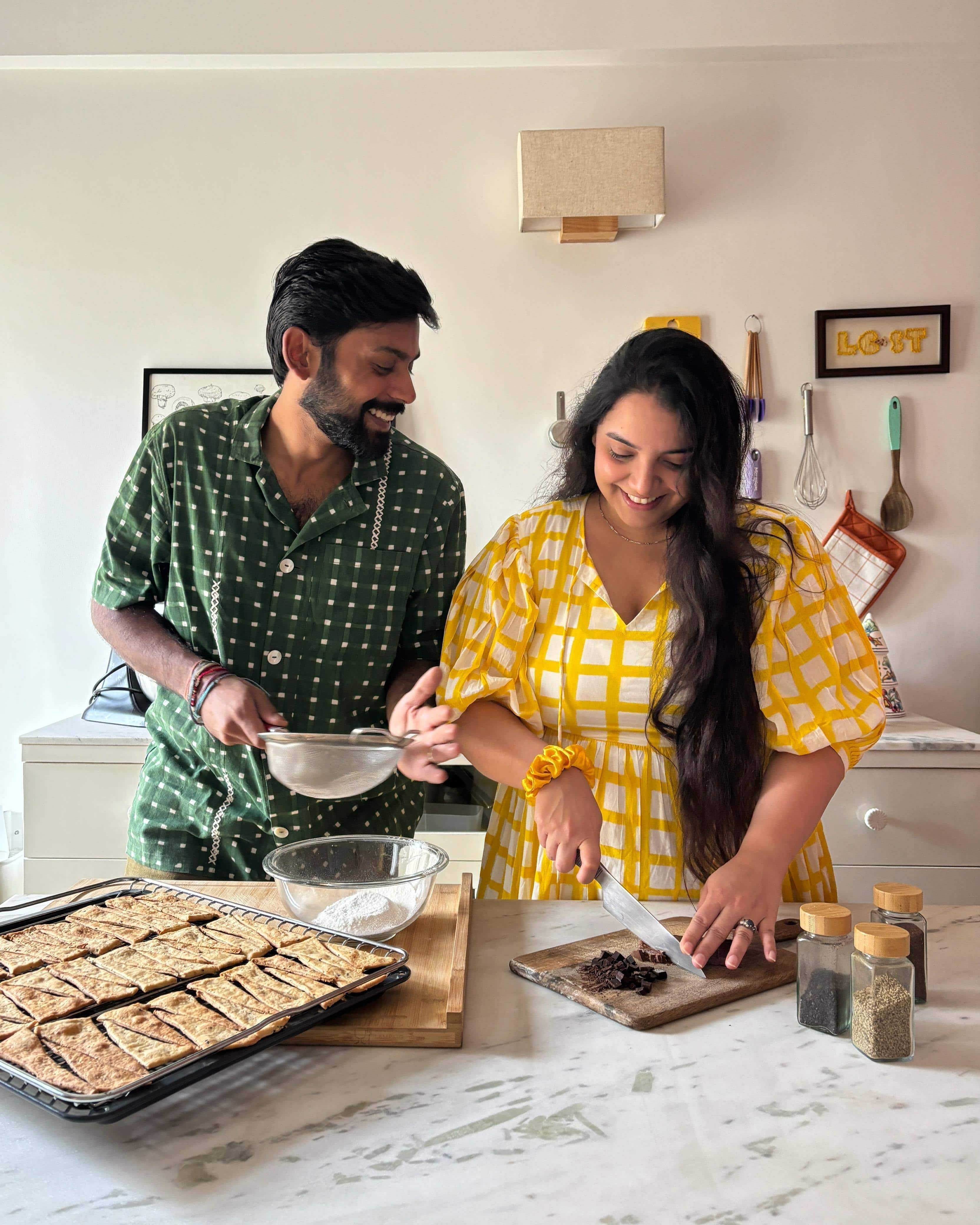 (Archit and Natasha of the LOST table)
We partnered with Archit and Natasha to co-host a webinar for aspiring home chefs on starting a supper club (amongst other small food businesses). Based on that session, here is your actionable roadmap to starting your own supper club.
The roadmap: From scratch to supper club
1. Define your USP (the “anti-restaurant” mindset)
The biggest mistake is trying to be a restaurant. You are not selling a meal; you are competing for your customer’s free time. You should find your edge by starting with what you do better than most, whether that is cooking, storytelling, or hospitality. Identify the gap in your area by asking what is missing, whether it is a certain cuisine, a specific vibe, or a curated experience.
Finally, think deeply about the concept and define what makes it feel like only you can do this. For example, The LOST Table builds menus around a memory, a smell, an ingredient, or a trip. One of the recent LOST table supper clubs was nostalgia-themed and called ‘Back to School’. Your edge could also be a specific sensation, like the numbing málà flavour profile central to Sichuan cuisine used by House of Málà.
2. The boring (but essential) logistics
Starting from home is a legitimate path, but you must handle the fundamentals early to protect your business.
- Food safety and registration: You will need an FSSAI registration via the FoSCoS portal. Most beginners require the basic registration, which covers annual turnovers up to ₹12 lakh.
- Taxes and compliance: GST registration is generally mandatory once your annual turnover exceeds ₹20 lakh for services. You can monitor the latest thresholds and compliance rules on the official GST portal website.
- Housing and community rules: Check your Housing Association (HOA) or Resident Welfare Association (RWA) bylaws. Some societies restrict commercial activities or high guest frequency. Securing a simple "no objection" in writing for private hosting can prevent neighbor disputes or legal issues.
3. The reality check: Space and vibe
Before committing, answer these three questions honestly:
- Does your home actually work for hosting? Consider washroom access, parking, and the flow from entry to exit.
- Can you create the right atmosphere for strangers? This includes making people feel relaxed and part of the room.
- Can you host confidently? You need to lead the room and manage different personalities because you are running an experience, not just cooking food.
Pro-tip: For plates and serverware, buy only what you will reuse; small plates and neutral colours like white or black help food look better and are easier to store.
4. Production: Building your menu
Start with a concept by picking a theme or feeling, such as a memory, a season, or a niche micro-cuisine. Draft a rough menu that is tight and realistic for your first run, including a starter, a main, and a dessert. Do an access check to make sure ingredients are easy to source consistently and that you have the required equipment. Hyperpure is an excellent sourcing solution in this department, offering you access to the same ingredients used by over 100,000 restaurants. Hyperpure also offers an events and party store for everything you need to host an evening of food and drinks.
 5. Pricing: The money talk
Start by calculating your per-plate food cost and the cost of running the space. Wholesale platforms like Hyperpure allow chefs to access quality-checked ingredients and kitchen supplies at wholesale prices, helping manage costs as you scale.
Many club hosts, including Archit and Natasha at The LOST Table, do not pay themselves a fixed wage or salary per event; instead, they work on profit margins to make the format viable. Remember that you are not selling a meal; you are selling an experience, a table, and a story.
6. Marketing: Beyond followers
You do not need a massive following to sell out; you need a system.
- Start small: Use friends and family for your first two or three events to create energy and early social proof.
- Direct channels: Focus on direct channels like email and WhatsApp for conversions. The LOST Table sees roughly 50 percent of conversions through these high-intent channels, compared to around 20 percent from Instagram.
- Be the face: Above all, show your face and share the "why" behind what you are making, because people buy from people.
Running a supper club is high energy. But when the wine is flowing, the room is buzzing, and strangers are exchanging numbers because they bonded over your food, there is no feeling like it.
If you are ready to start, you can source everything from dairy to meat to veggies through Hyperpure with just a phone number to sign up. If you are looking for a one-on-one consultation on how to start your supper club, reach out to Archit Agarwal on Instagram.