
How Kopitiam Lah found its place in Bengaluru’s crowded café scene ft. Joonie Tan
Malaysian food in India rarely gets treated as its own cuisine. In Bangalore or Delhi, laksa, nasi lemak and satay usually sit on "Pan-Asian" menus alongside pad thai and dim sum, with little sense of where they come from.
Chef and pastry artist Joonie Tan, who grew up in Malaysia, wanted to change that. But she also missed something else from home: the kopitiam, Malaysia's neighbourhood coffee shop. Bangalore had a gazillion cafés, but none felt like the ones she grew up with.
After moving to Bengaluru in 2012, Joonie built a career here, first as Chief Pastry Artist at Lavonne, a chain of bakery institutes and cafes co-founded by her husband, Chef Vinesh Johny, and later through her own custom cake venture, 180 Degree Celsius. Then people started asking her a question she couldn't shake: why wasn't there a place dedicated to Malaysian food in Bangalore?
“We always had mixed Pan-Asian, but nowhere focused purely on Malaysia.” she recalls.
Her answer wasn't going to be just another Malaysian restaurant. It would be a kopitiam.
The word combines kopi, coffee, and tiam, shop. These neighbourhood coffee shops grew out of Malaysia's colonial-era food culture, shaped largely by Hainanese and Hokkien immigrants. They are casual, communal places where condensed-milk coffee comes in thick porcelain cups, marble tables fill the room, and breakfast can stretch well beyond breakfast.
That was the world Joonie grew up in. In 2024, she brought it to Indiranagar with Kopitiam Lah.
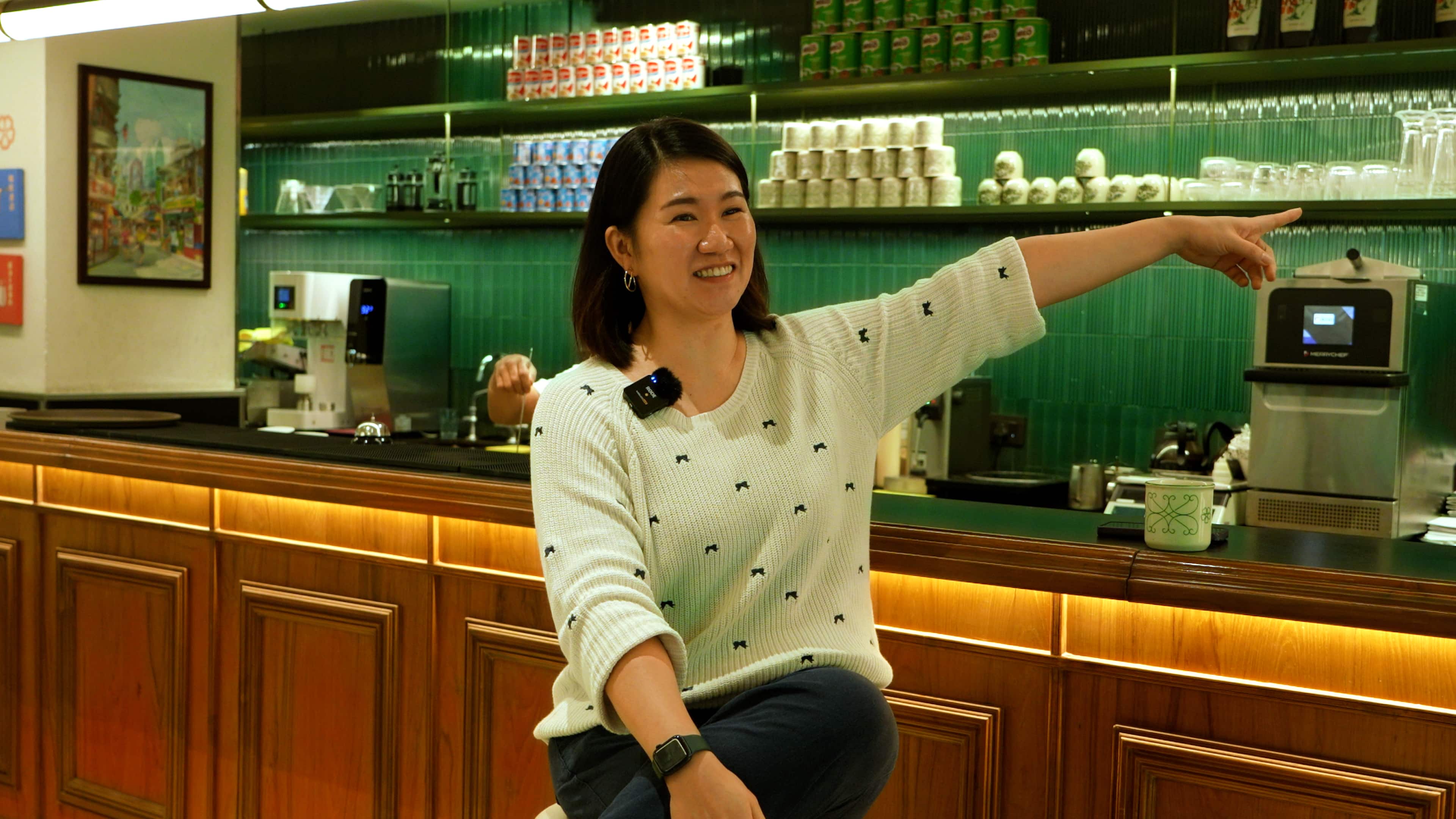 (Joonie Tan, founder of Kopitiam Lah)
Recreating a kopitiam in India
Food was central to Kopitiam Lah, but recreating a kopitiam meant getting the setting right too.
Before finalising the design, Joonie and her team made multiple trips to Malaysia. They visited around 15 to 20 kopitiams, eating at different places and studying their architecture, colours, furniture and smaller details.
That research eventually found its way into Kopitiam Lah. The green-and-white tiles and vintage objects reflect what Joonie saw across Malaysian kopitiams. Some pieces were collected during those trips, while others came from her own family.
Joonie points out that the objects aren't replicas or props: "All these antiques are actual antiques. It's not just put there."
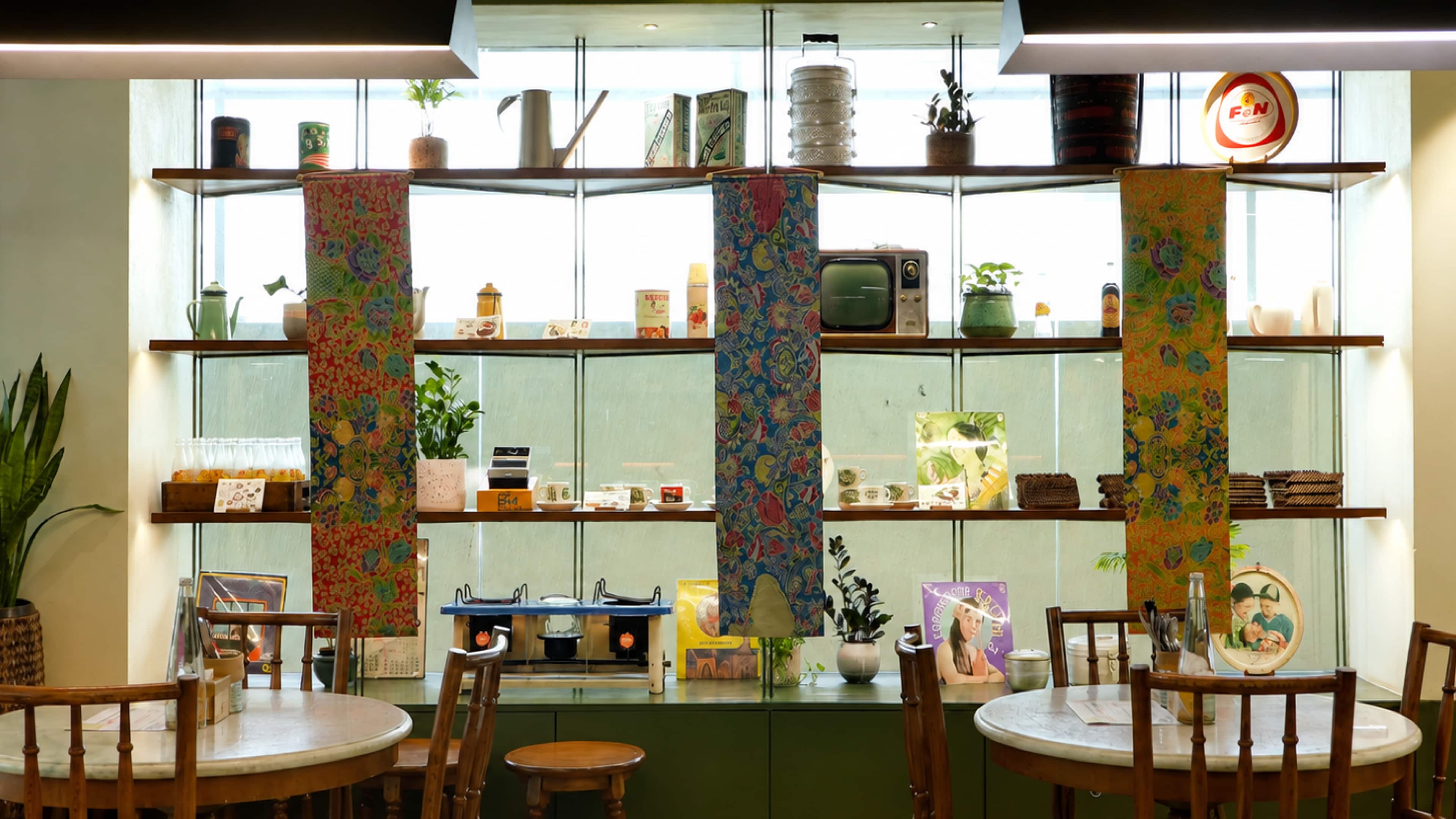 (Inside Kopitiam Lah, Bengaluru)
A menu rooted in Malaysian food culture
The menu extends past the familiar laksa-and-satay shorthand most Indian diners associate with Malaysian food, into dishes like char kway teow and Penang-style fried noodles that rarely make it onto pan-Asian menus at all in India.
But Joonie singles out kaya toast as the dish closest to her, coconut custard made from pandan, coconut, and egg, layered between two slices of toasted bread with a soft-boiled egg and coffee on the side. It's also, tellingly, a family ritual rather than just a menu item.
"Every Saturday morning, you will see my son sitting outside, belting on his kaya toast with a half-boiled egg and his hot Milo."
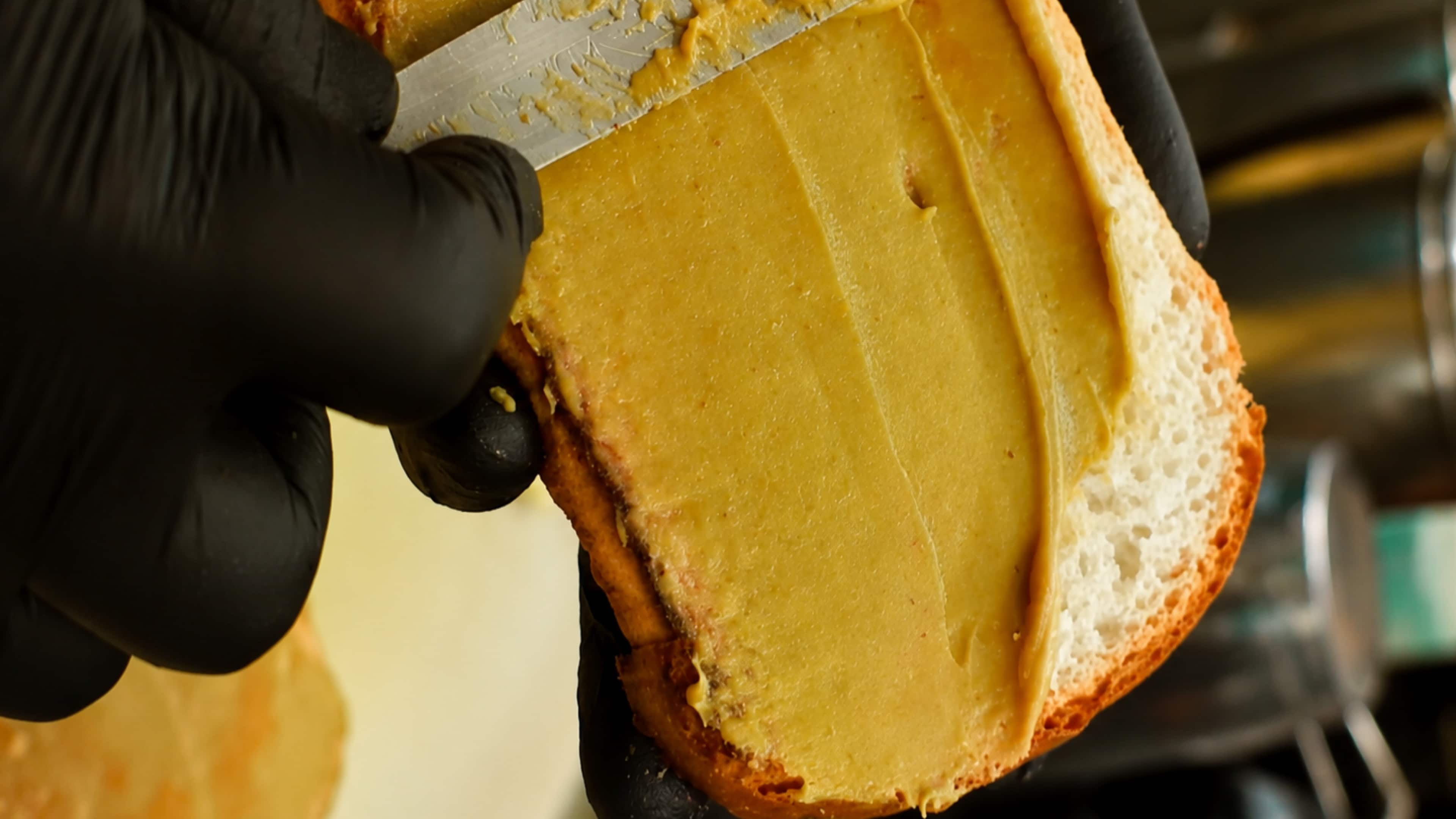 (Kaya toast in making)
Recognition from Malaysia
For Joonie, one of the biggest moments since opening Kopitiam Lah came from Malaysia itself.
Representatives from the Malaysian Parliament visited the restaurant and presented the team with a token of appreciation. For a Malaysian bringing her country's food culture to Bengaluru, the visit carried a significance beyond a typical restaurant milestone.
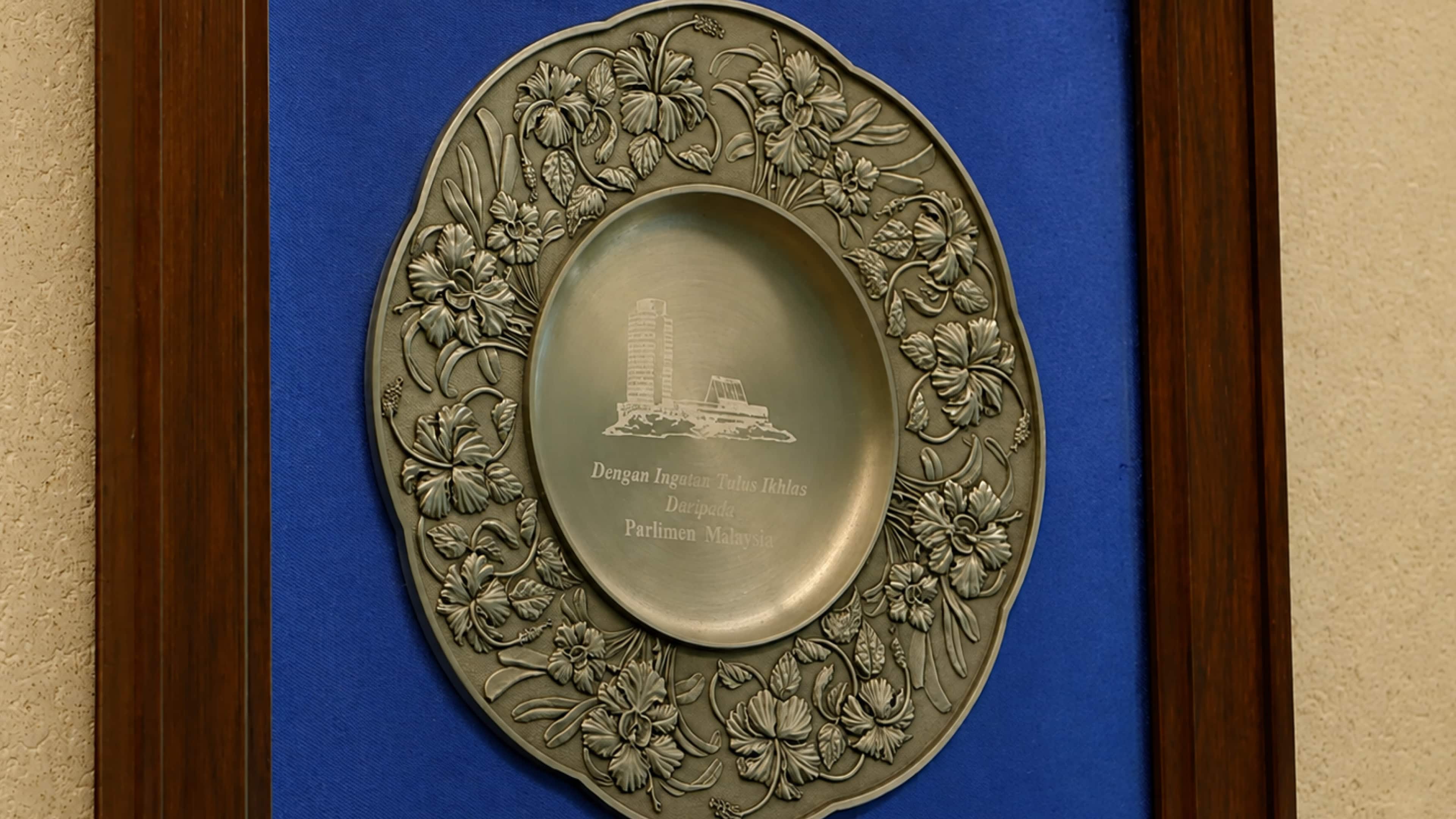 (Recognition from the Malaysian Parliament)
The journey continues
Opening a restaurant built around another country's café culture always carries some uncertainty.
“Honestly speaking, when we planned Kopitiam, we didn't know whether it would work or not.”
Two years on, Kopitiam Lah has found its place in Bengaluru's food scene. In 2025, it was ranked #23 on the Condé Nast Traveller x District Top Restaurant Awards' list of India's 50 best restaurants, and was also named Best New Restaurant at the Zee Zest Unlimit Awards.
“I'm just so grateful that everyone who has been to Kopitiam really loves Kopitiam,” Joonie exclaims.
For Joonie, though, the achievement is about more than the accolades. Kopitiam Lah remains a way of bringing the food, details and everyday culture she grew up with to Bengaluru, and sharing a little bit of home with everyone who walks in.
📺 Watch the full conversation with Joonie Tan, here.
Thinking of adding authentic global flavours to your menu?
Hyperpure helps restaurants and cafes source quality ingredients across cuisines, making it easier to build consistent menus without compromising on authenticity.