
The story behind running “The Table”: India’s #1 restaurant
Most restaurants don’t begin with a detailed strategy. They usually begin with a feeling that won’t go away, a sense that something is missing from the city you live in, or from the kind of place you want to spend time in. After a while, you stop just wishing it existed and try building it yourself.
Fourteen years later, in 2025, our partner restaurant, The Table, was ranked #1 in India by the Condé Nast Traveller × District Top Restaurant Awards.
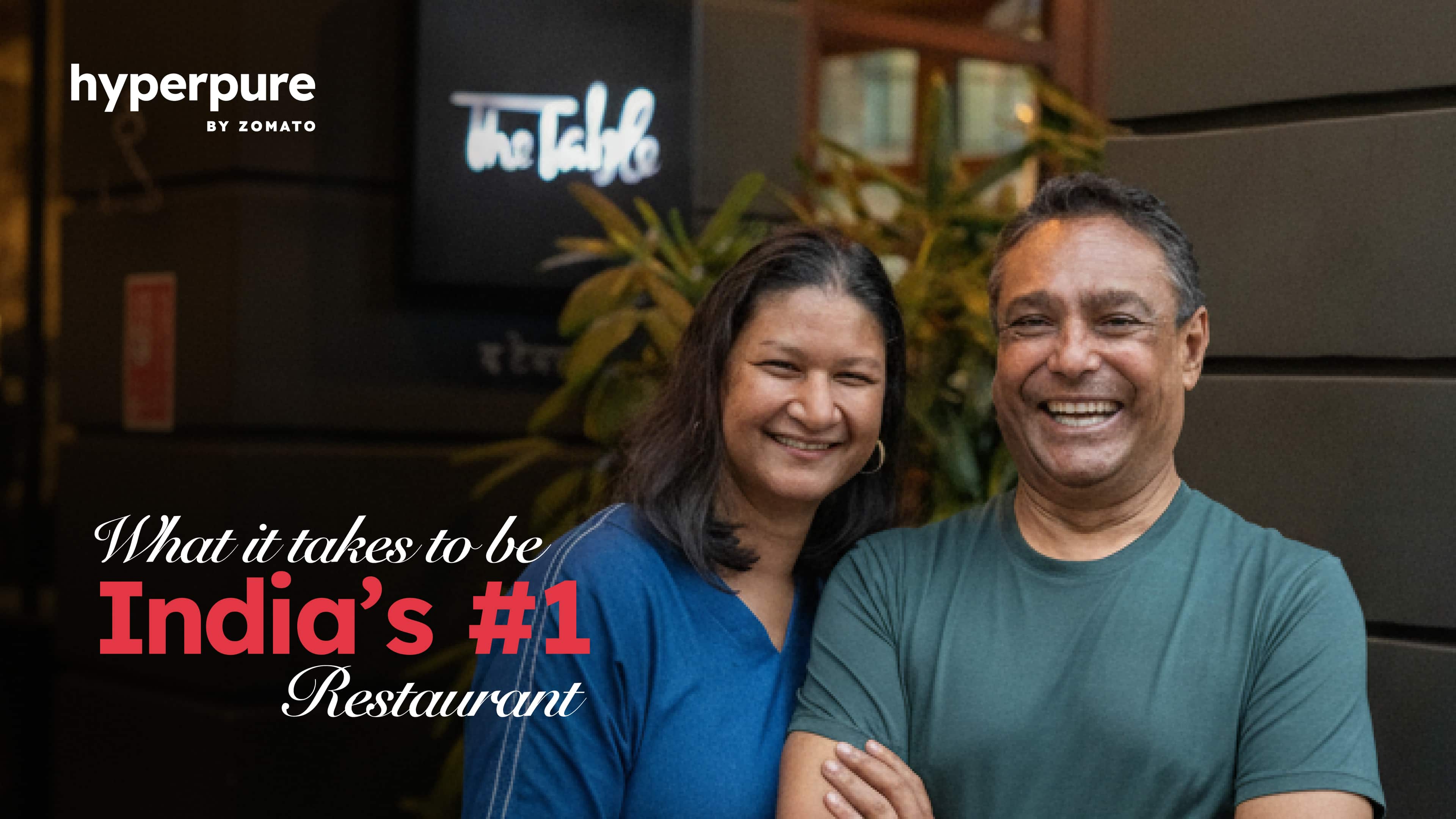
Recently, we met and spoke to its co-owners, Gauri Devidayal and Jay Yousuf. They are quick to brush off the glamour of being the best. Instead, their focus is entirely on the work itself, relying on the quiet routines and daily decisions that got them there.
"I can eat, but I can't cook"
The conversation begins, naturally, with food.
“I usually say I can eat but I can’t cook,” Gauri says. Jay smiles in agreement. “I can cook. Mostly for fun. But I love eating more.”
It is a modest introduction for the pair behind what is now being called India’s best restaurant. For Jay, the path wasn't linear. After years in telecommunications in San Francisco, he hit a wall. “Every field has that burnout point,” he says. “I think I have reached that space.”
He returned to India with an obsession rather than a business model. There was no market research to see if Mumbai was "ready." As Jay puts it: “We were the diners for that kind of cuisine. So we built what we wanted to eat.”
The 20-foot table
The restaurant’s namesake traces back to a memory Gauri had of a café near her old office in London. It featured a long communal table with a big pot of sugar in the middle. “People just sat around it,” she recalls. “There was something great about the energy.”
When they opened in 2011, the idea of sitting with strangers was foreign to Mumbai.
“For the first six months it was challenging,” Gauri says. “Sometimes people were forced to sit there because there were no other tables.”
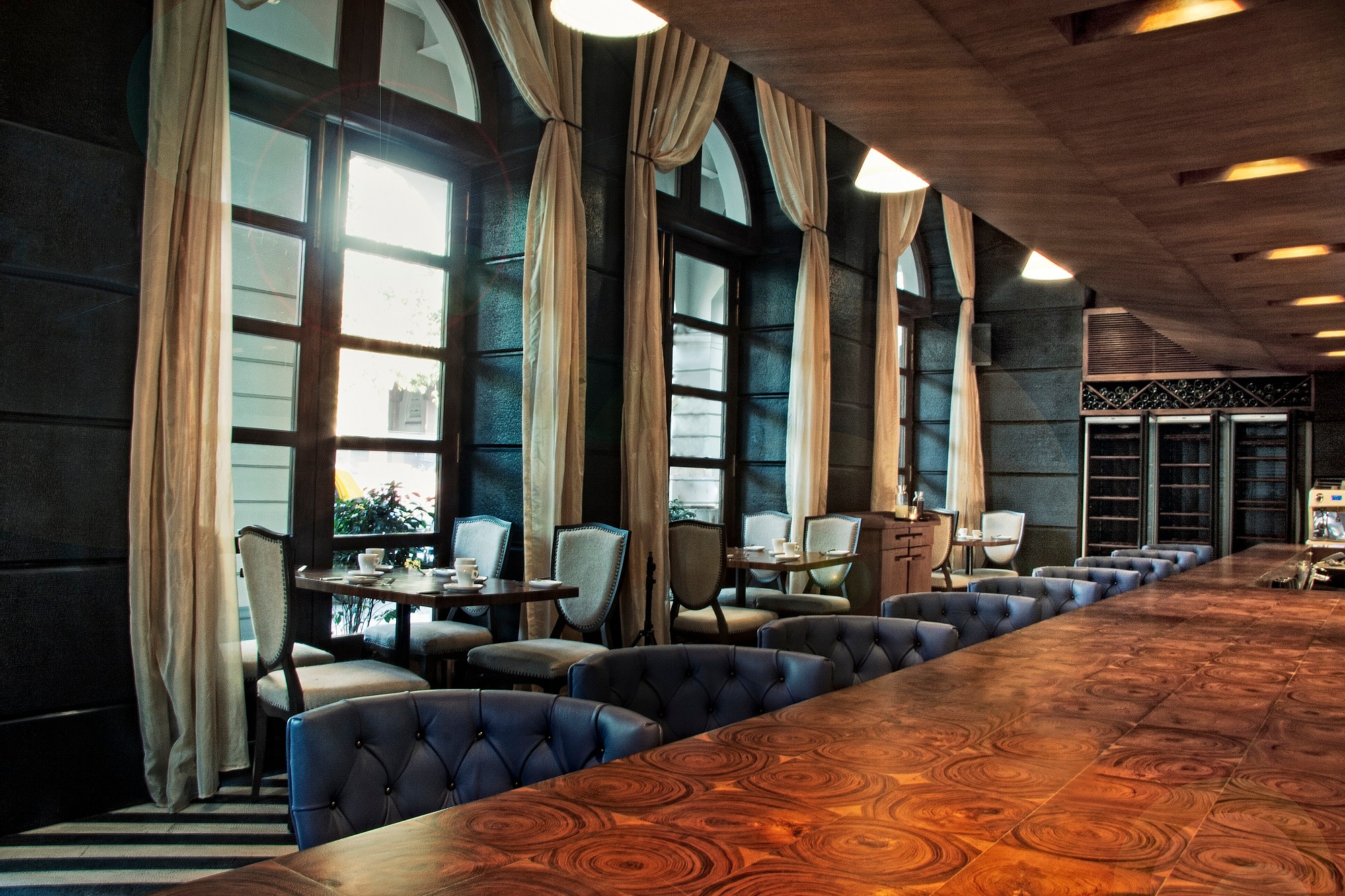 (The 20-foot communal table at The Table, Mumbai)
Gradually, the friction turned into a feature. Guests began asking for those seats. Positioned near the bar with a view of the entrance, it became a sanctuary for the solo visitor. “You can dine solo but you’re not alone,” she explains.
What “San Francisco inspired” actually means
The phrase caught on early, but for Jay, it wasn't about duplicating California recipes. It was about a way of thinking. Inspired by Alice Waters of Chez Panisse, the focus shifted to produce, seasonality, and letting ingredients speak.
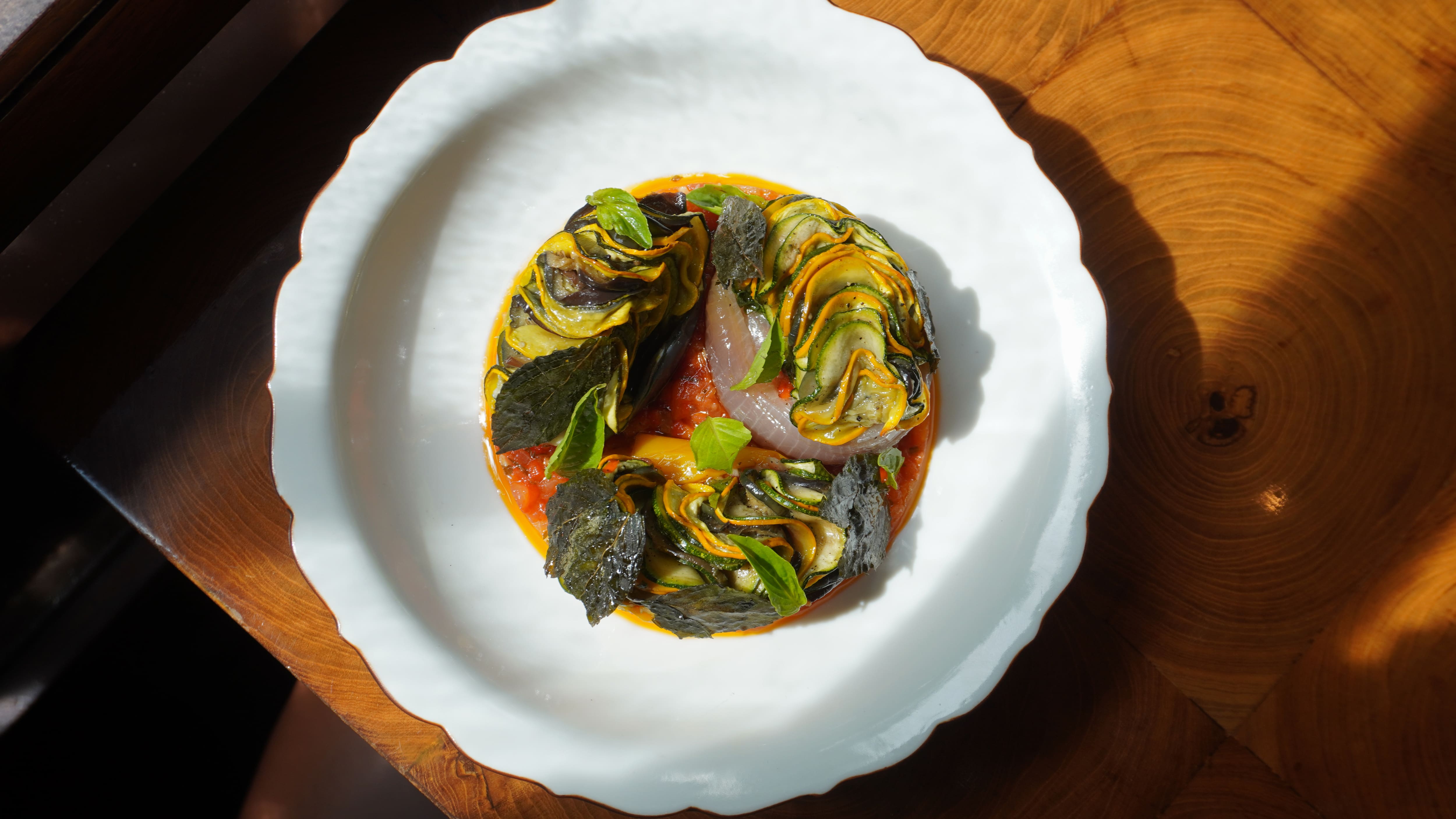 (Chilled Ratatouille Tian at The Table, Mumbai)
“It’s the ingredients that are the hero,” Gauri adds. Whether the kitchen is led by a new chef or a veteran, the attention to sourcing remains the one constant anchor.
The farm that started with spinach
The Table’s famous farm in Alibag didn't start as a corporate sustainability initiative. It started because they had too much spinach at home.
“I just brought it and dropped it off at the kitchen,” Gauri says. The chefs noticed the difference immediately. But turning a backyard garden into a professional supply chain took time, about two years of testing soil and planning cycles. Last year, that "accidental" farm produced 1.4 tons of produce.
Today, it serves as an educational hub where children harvest basil and make pesto. As Jay notes, “No kid was throwing away their spinach” once they saw where it came from.
Awards and the glamour myth
Validation matters. Jay remembers their first Times Food Award clearly: “You’ve put your hard work and money and effort. Validation is important.”
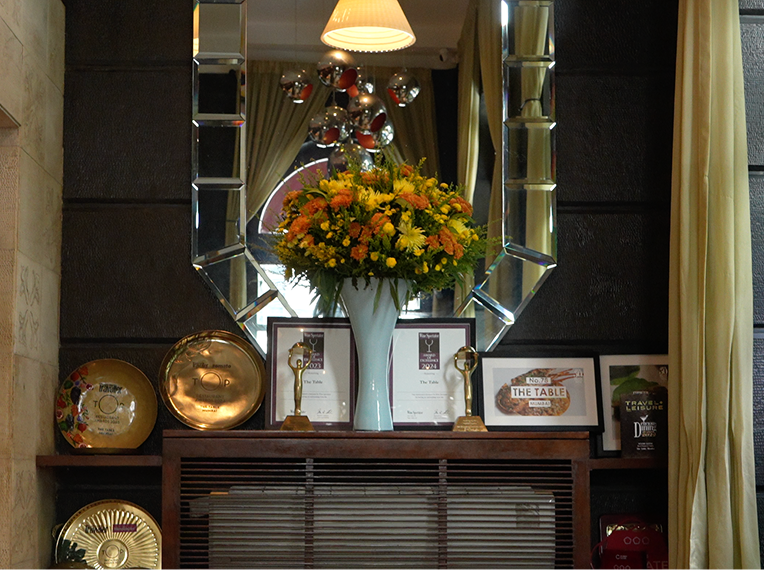 (Awards display at The Table, Mumbai)
But the glamour of being #1 is a small slice of reality. Most days are defined by the repetitive rhythm of service. As Gauri puts it,* “Every diner is a critic.” *They’ve seen it all: from the chaos of a crowd gathering when Rohit Sharma dines, to the blunt sting of a guest asking when they would "start serving edible food" after a menu change.
Looking back at 2011
When asked what advice they would give their younger selves before signing that first lease, Jay is candid. “It’s a tough industry. Mistakes are expensive.”
Gauri, however, views the journey through a different lens:
“I don’t have regrets. I have lessons. Maybe four days in a week you regret it. Three days make up for it.”
As the interview ends, the room shifts. Staff gather near the pass. Glassware is checked. The reservation list is reviewed one last time. It is the invisible work that keeps a restaurant steady long after the awards ceremony is over.
“I’ve always said the hallmark of a great restaurant is if you can dine at it every day,” Gauri says. “If we’re bored, something needs to change.”
Hyperpure continues to be the backbone for the best restaurants in the industry.