
The tofu cabinet: a short guide to Japan's favourite bean curd
Walk into any supermarket in Osaka or Tokto and you'll find an entire aisle dedicated to tofu. Not a shelf. An aisle. Silken, firm, grilled, fried, frozen, fermented. Each one is built for a completely different job in the kitchen, and none of them are interchangeable.
Some of these are common in India and widely served in restaurants here. Others remain exotic, the kind you'd only find at a proper specialty Japanese dining outlet.
Here's a rundown of the kinds you'll actually run into, and what to do with them.
Common in India
Kinu-goshi (silken tofu)
This is the soft, custardy stuff. It's made without pressing out the whey, so it holds a huge amount of water and practically wobbles on the plate.
Eat it cold with a splash of soy sauce and grated ginger. That's hiyayakko, and it's less a recipe than a small act of restraint. Don't try to stir-fry it. It'll fall apart before it hits the pan.
Dishes: hiyayakko (cold tofu), miso soup where a delicate texture matters, mapo tofu when you want it silkier.
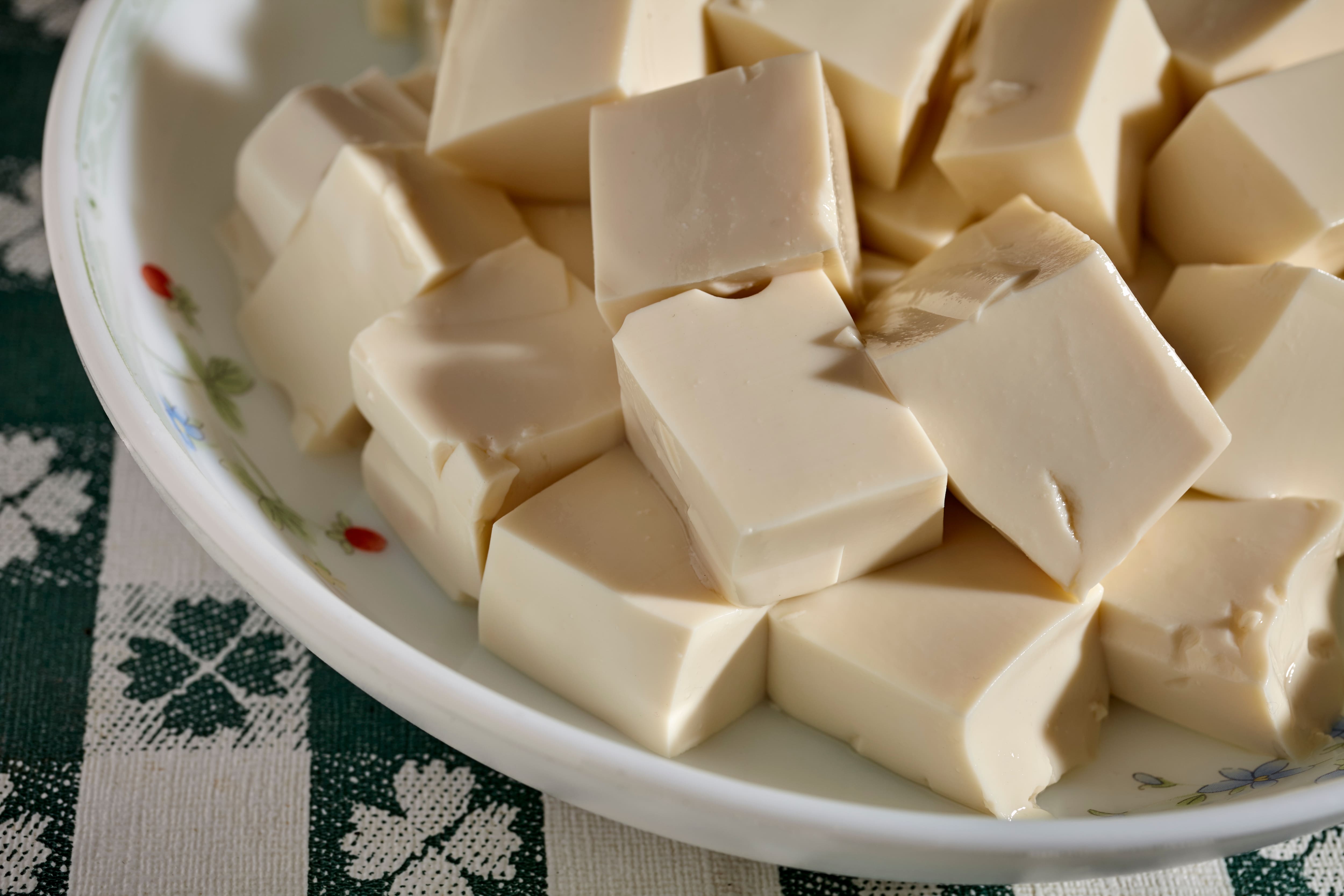 (Kinu-goshi: silken tofu)
Momen (firm/cotton tofu)
Pressed through a cotton cloth (hence the name), momen holds its shape under heat. This is your workhorse for miso soup, simmered dishes, and mapo tofu.
If a recipe calls for tofu to be pan-fried, grilled, or simmered for more than a minute, it's asking for momen.
Dishes: miso soup, mapo tofu, nikujaga-style simmered vegetables, tofu steak, agedashi-dofu's base block before frying.
This is also the type you'll find on Indian grocery shelves. Firm tofu dominates the domestic market here, largely because it holds up in stir-fries and curries the way paneer does. Home cooks already know what to do with a firm block, even if the flavor takes some getting used to.
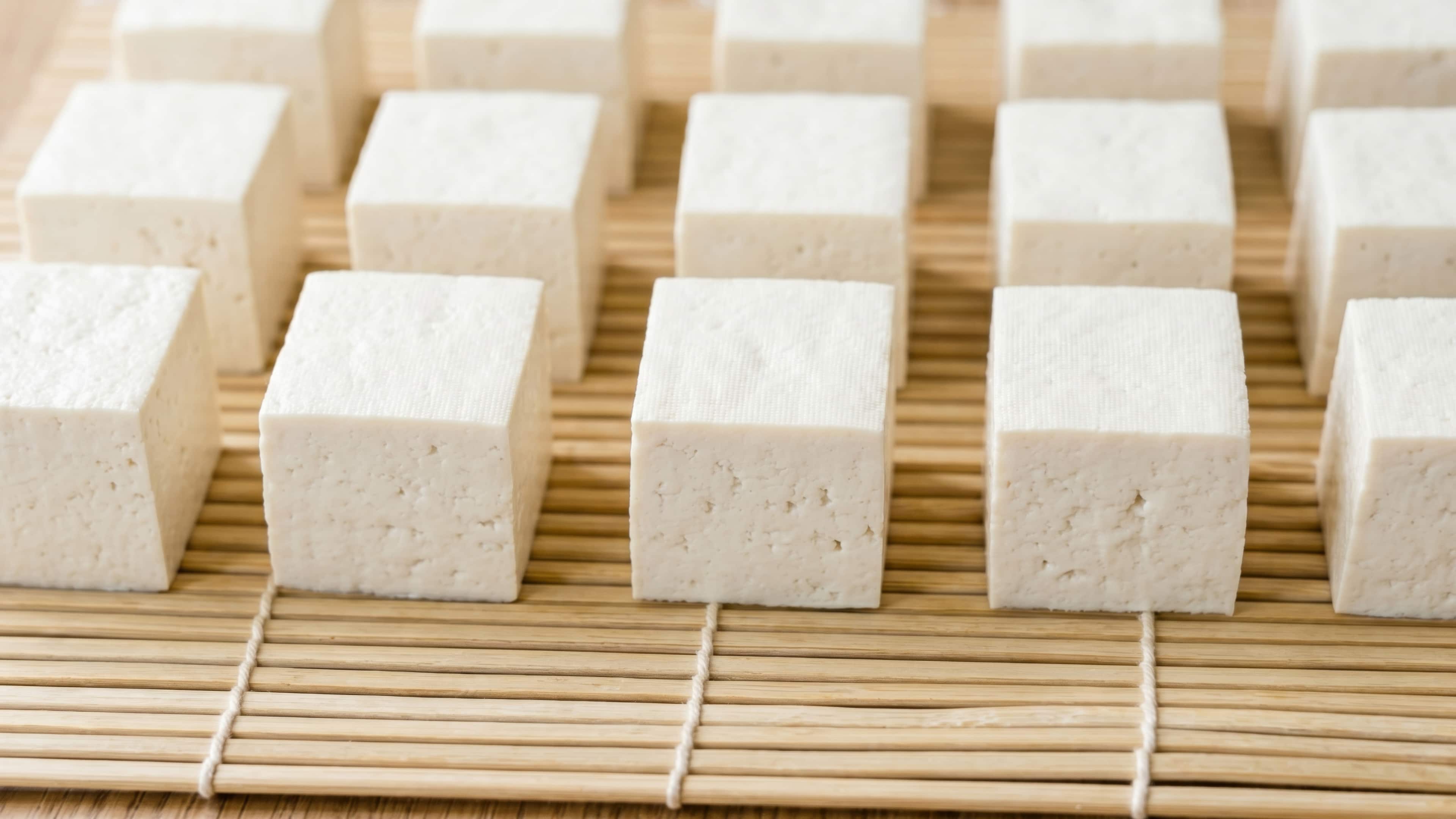 (Momen: firm/cotton tofu)
Rare to find store-bought in India
Yaki-dofu (grilled tofu)
Firm tofu with a light char on the surface, usually from a direct flame. The char does two things: it firms up the exterior even more, and it adds a faint smokiness that plain firm tofu doesn't have.
You'll see this in sukiyaki (a hot pot of thinly sliced beef, vegetables, and tofu simmered in a sweet soy broth), where it needs to survive a long simmer without disintegrating.
Dishes: sukiyaki, dengaku (grilled tofu with miso glaze), nabemono hot pots.
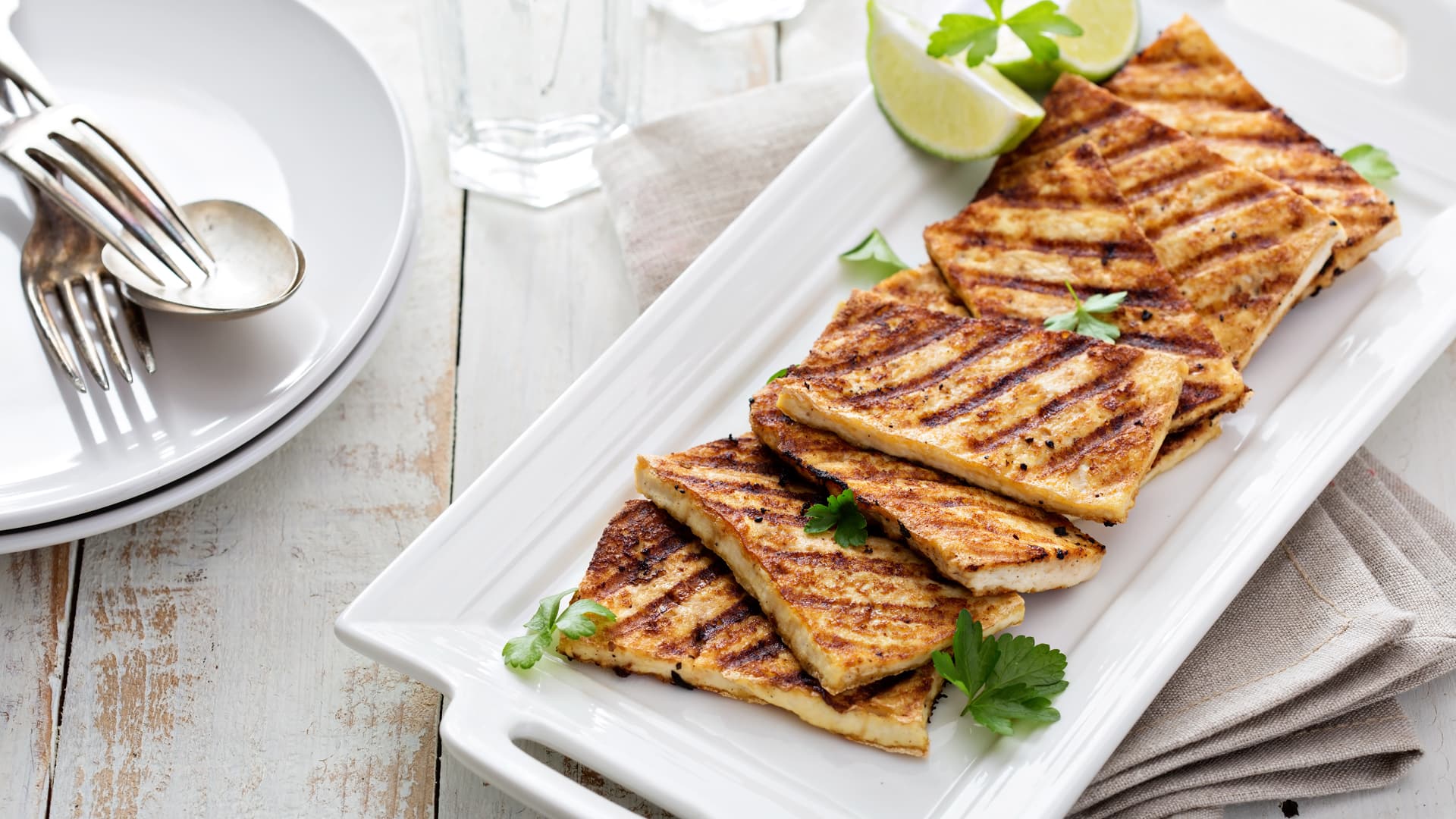 (Yaki-dofu: grilled tofu)
Agedashi and abura-age
Fried tofu comes in two forms. Agedashi-dofu is firm tofu, lightly floured and deep-fried, then served in dashi (a light Japanese stock, usually made from seaweed and dried fish flakes) with grated daikon (a mild white radish). Abura-age is thin tofu sliced and fried until it puffs into a hollow pouch, the kind used to wrap sushi rice for inari-zushi, or sliced into strips for udon.
They look similar on a menu but behave nothing alike in a pot.
Dishes: agedashi-dofu (the fried block itself, served in broth), inari-zushi (rice-stuffed abura-age pouches), kitsune udon (abura-age floating in the broth).
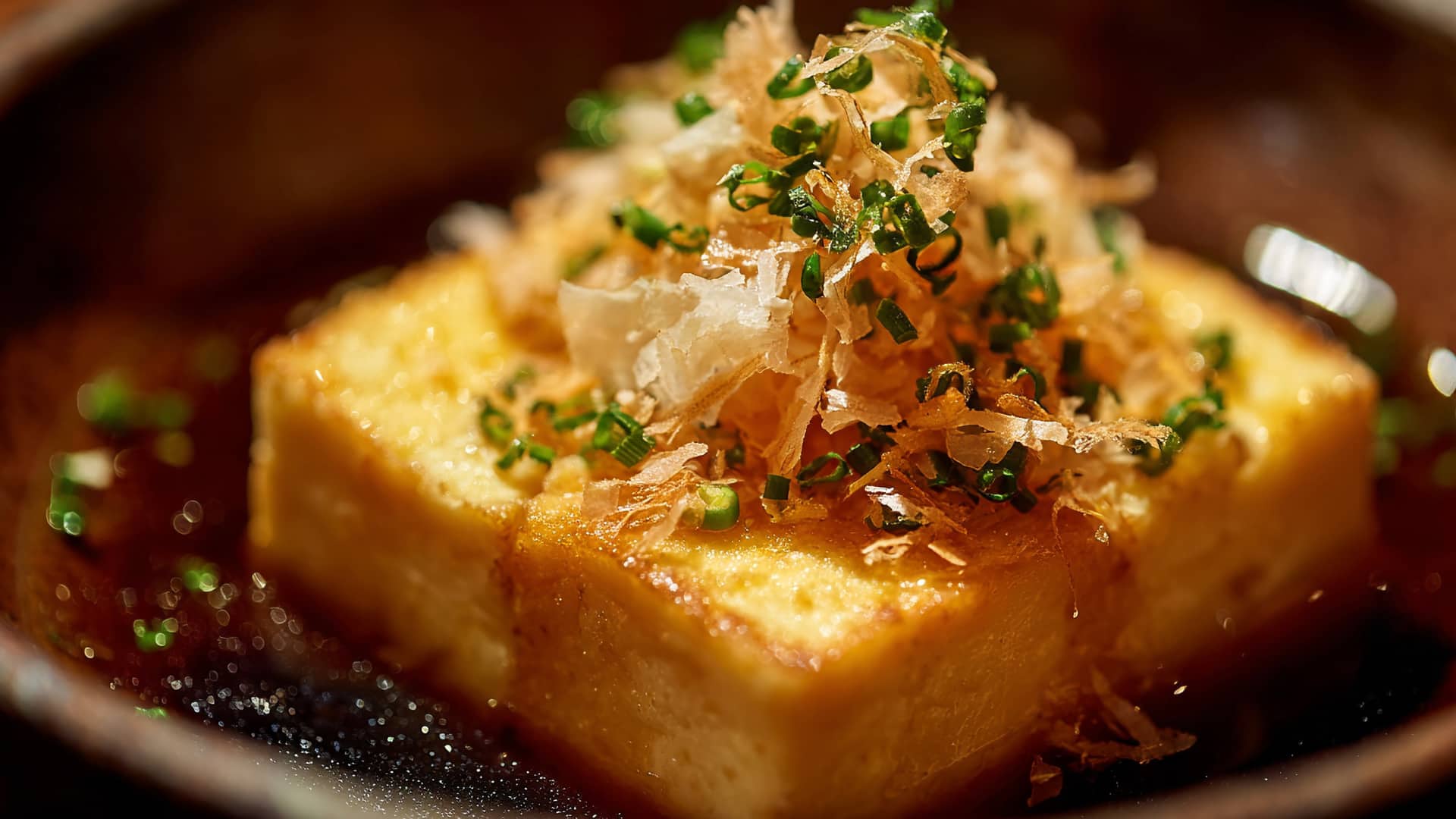 (Agedashi-dofu)
Koya-dofu (freeze-dried tofu)
This one comes from Buddhist temple kitchens, where tofu was frozen outdoors in winter to preserve it. What comes out is a spongy, cream-colored block that needs rehydrating before cooking.
Once soaked, it soaks up dashi and soy sauce like nothing else on this list. It's a completely different texture from anything fresh.
Dishes: koya-dofu no nimono (simmered freeze-dried tofu), temple vegetarian meals (shojin ryori), New Year osechi boxes.
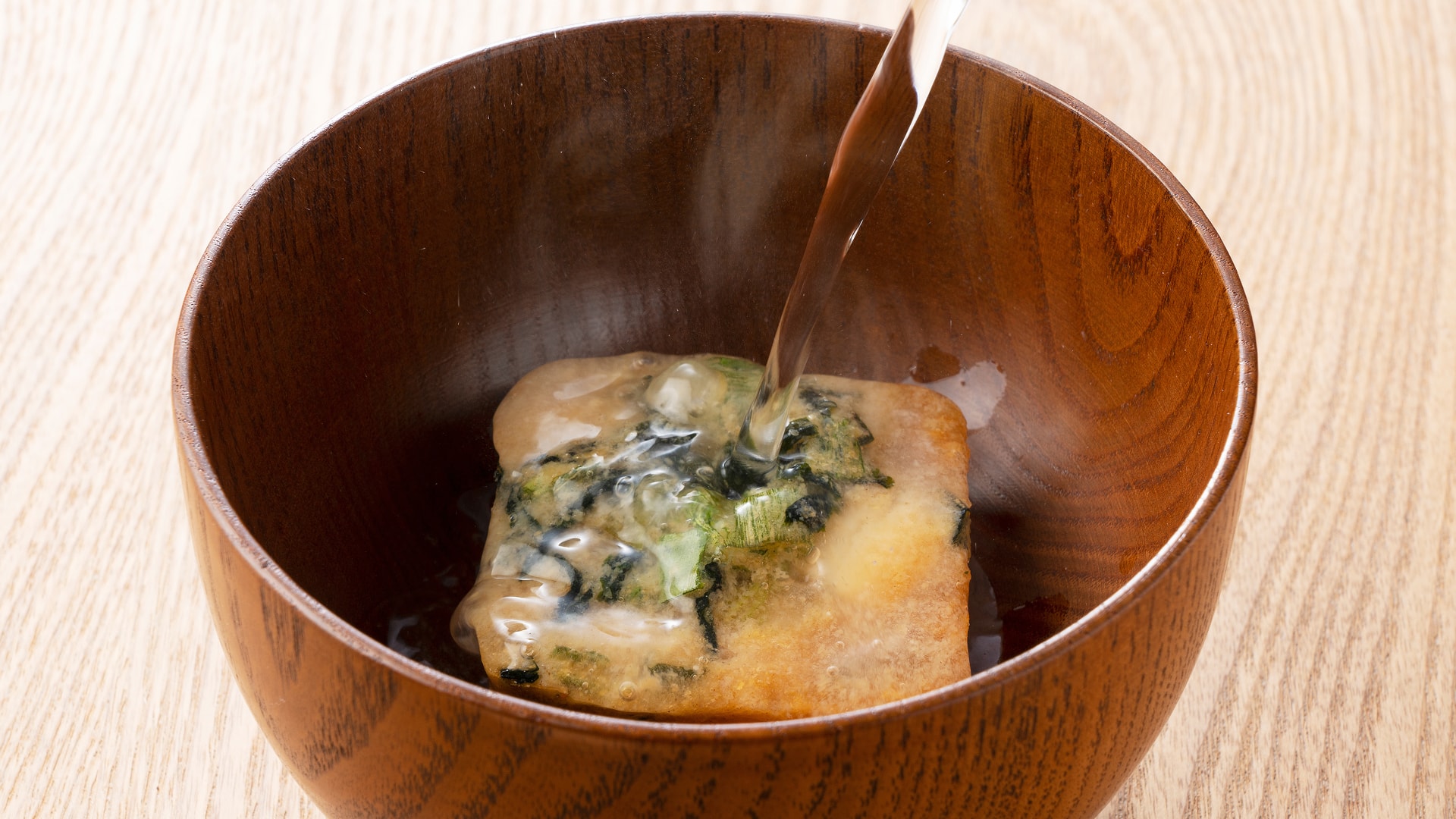
(Koya-dofu: freeze-dried tofu)
Which one do you actually need?
If a recipe just says "tofu" without specifying, it almost always means momen. Silken is for cold dishes and soups where you want it to melt into the broth. Everything else (grilled, fried, freeze-dried) shows up when a specific dish calls for it by name. These can easily be made in your kitchen if you can't source them; koya-dofu is the one exception.
Buy the wrong one and the dish still comes together. It just won't taste like the version you had in mind.
Setting up or running a Japanese restaurant in India? Hyperpure sources the ingredients that make sushi, ramen, and real tofu dishes possible.