
Will GLP-1 Drugs impact how India eats?
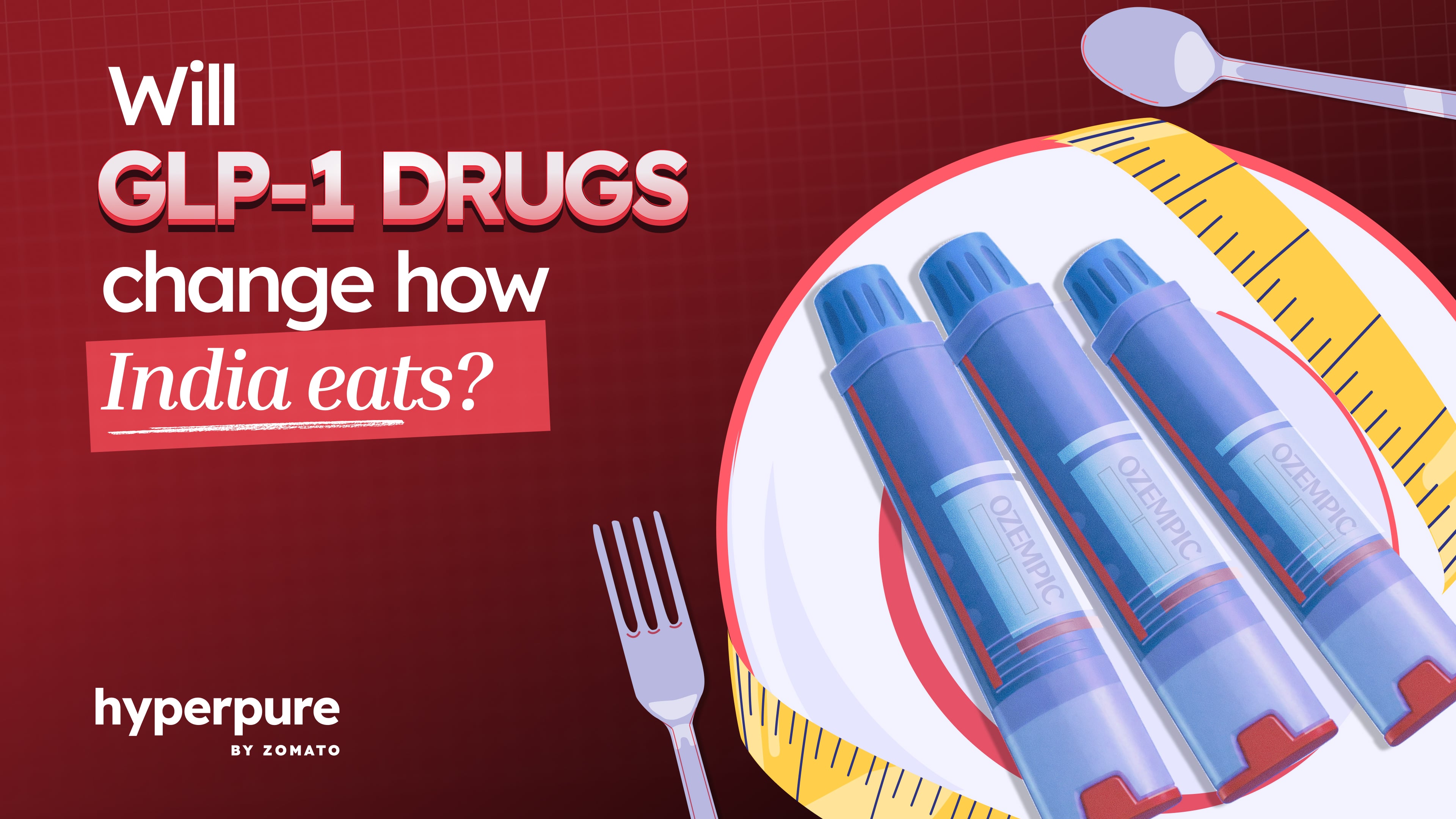
Aarav Khanna’s relationship with food changed in February. By his own count, he was eating out five or six times a week: a biryani here, a long Sunday brunch there, late dinners with colleagues that stretched past ten. His cardiologist, displeased with his HbA1c number (the amount of glucose in one’s hemoglobin), put him on tirzepatide, a GLP-1 medication.
Within three months, his portions had shrunk, late dinners ended earlier, and he routinely left his plate unfinished. Yet he was still going out just as often. He was simply ordering differently: smaller dishes, more protein, and leaving the bread basket alone. His relationship with food hadn't ended; it had just changed shape.
"I still want good food," he said. "I just want different things from it now." Aarav's case is a preview of a massive behavioral shift poised to sweep across urban India.
What are GLP-1 drugs and how do they work?
GLP-1 (glucagon-like peptide-1) is a natural hormone secreted by the gut after a meal. It prompts the pancreas to release insulin, slows gastric emptying, and signals the brain that the body is full. Modern compounds like semaglutide (Ozempic, Wegovy) and tirzepatide (Mounjaro) are synthetic, highly potent, long-acting variations of this molecule. Originally developed for Type 2 diabetes, their capacity for profound weight loss quickly turned them into a global economic phenomenon.
Unlike traditional, willpower-driven diet fads, these drugs do not help you resist temptation; they eliminate it. Users describe "food noise", the constant, subconscious mental chatter about what to eat next, suddenly going quiet. When this psychological static is removed, cravings for sugar and ultra-processed snacks fade. What remains is a calibrated appetite that favours nutrient density, lean protein, and high-quality ingredients that satisfy in smaller volumes. The demand for food doesn't disappear; it upgrades.
Consumer data and behavioral shifts in the US market
The United States, where these drugs went mainstream first, provides a roadmap for this shift. By late 2025, the KFF Health Tracking Poll found that one in eight American adults had taken a GLP-1 drug, a figure projected to rise to one in four by 2030.
Data from tracking agencies reveals a distinct, two-phase consumer evolution:
- The initial pull-back (Months 1–6): Consumers immediately cut spending on fast food by 5% and groceries by 4 percent, according to Bain & Company. A Cornell University study of 150,000 households mirrored this, showing a 5.3% drop in grocery spend, with the steepest declines in junk food while fresh produce and protein grew.
- The intentional pivot (After 1 Year): Counterintuitively, Circana data shows that after a year on the drug, a user's restaurant spending actually increases slightly, with casual dining up 4.1%.
This reveals that consumers are not leaving the restaurant scene. Instead, they eat out less impulsively and more intentionally, prioritising quality, atmosphere, and premium ingredients. Furthermore, tracking data from Bain and Numerator confirms that these high-protein, health-conscious habits often persist even after patients stop taking the medication. By 2030, Circana projects these households will represent 35% of all US food and beverage units sold.
Generic competition and the adoption timeline in India
While Mounjaro and Wegovy entered the Indian market in mid-2025, their high cost, ten to twenty thousand rupees a month, initially restricted them to the affluent. That barrier is dissolving rapidly.
Semaglutide's Indian patent expired on 20 March 2026.
More than forty domestic drugmakers, including Sun Pharma, Dr. Reddy's, Cipla, and Lupin, have entered the market, and prices have already fallen sharply: generic versions launched 50 to 70 percent below the branded price. Expect further declines as manufacturing scales up.
This kind of price collapse has a precedent. Indian generics famously cut the cost of HIV treatment worldwide by 99 percent, from thousands of dollars a year to under a hundred. The same playbook of scale, competition, and a deep bench of local manufacturers is now aimed at GLP-1 drugs.
The market opportunity is enormous. ICMR-INDIAB's most recent national data found 254 million Indians with generalised obesity, 351 million with abdominal obesity, and another 136 million with prediabetes. Analysts expect the domestic GLP-1 market to grow more than sixfold over the next decade, and if costs keep falling the way they have with other drug categories, GLP-1 therapy could move from a niche urban luxury to something far more widely accessible within a few years.
The direct impact on Indian restaurants and menu design
As millions of consumers pivot toward lower-volume, higher-quality diets, the food industry faces a structural mandate to adapt. In the US, this shift is already operational: 42% of restaurant operators have added or are actively considering GLP-1-friendly options to capture diners prioritizing lean proteins and fresh produce.
In India, however, this transition exposes a deep operational fault line.
While modern, protein-forward health chains can pivot seamlessly, the evolution presents an existential challenge for legacy QSRs and traditional mithai (sweet) shops. Their core economic and culinary models are structurally bound to high-carb, sugar-dense indulgence. Translating a brand identity rooted in the celebration of ghee and sugar into a macro-optimized menu is an incredibly steep culinary and financial hurdle. While some legacy giants are attempting smart pivots, such as Bikanervala introducing stevia-based mithais to retain health-conscious diners, fundamentally re-engineering high-volume comfort food remains a massive roadblock.
Where individual kitchens face friction, food-tech platforms are stepping in to accelerate the market's evolution. Zomato read this trend early, rolling out its Healthy Mode feature in late 2025. The platform solves for nutritional transparency by generating macros for all the dishes using AIscoring restaurant dishes high, medium, or low based on real-time metrics for protein, fiber, and micronutrients, thereby giving customers instant filtering power for superior nutritional choices.
Concurrently, cloud kitchens are beginning to institutionalize this demand. Curefoods made the market's first explicit move by launching its EatFit Lab brand on Zomato, explicitly positioning it as a GLP-1-friendly, high-protein outlet. These are no longer fringe experiments; they are early structural signals of an entire ecosystem reorienting around a far more demanding, nutritionally literate diner.
Conclusion: how the food supply chain must adapt
The Indian food ecosystem has always been contradictory, simultaneously celebrating heavy, celebratory dining while managing the world's largest diabetic population. GLP-1 drugs do not resolve that contradiction, but they give a massive segment of the population the physiological push to change how they eat.
The emerging diner still wants the restaurant experience, but they bring a smaller appetite and much higher standards. For establishments focusing on quality, transparency, and protein, this shift is an asset, not a liability.
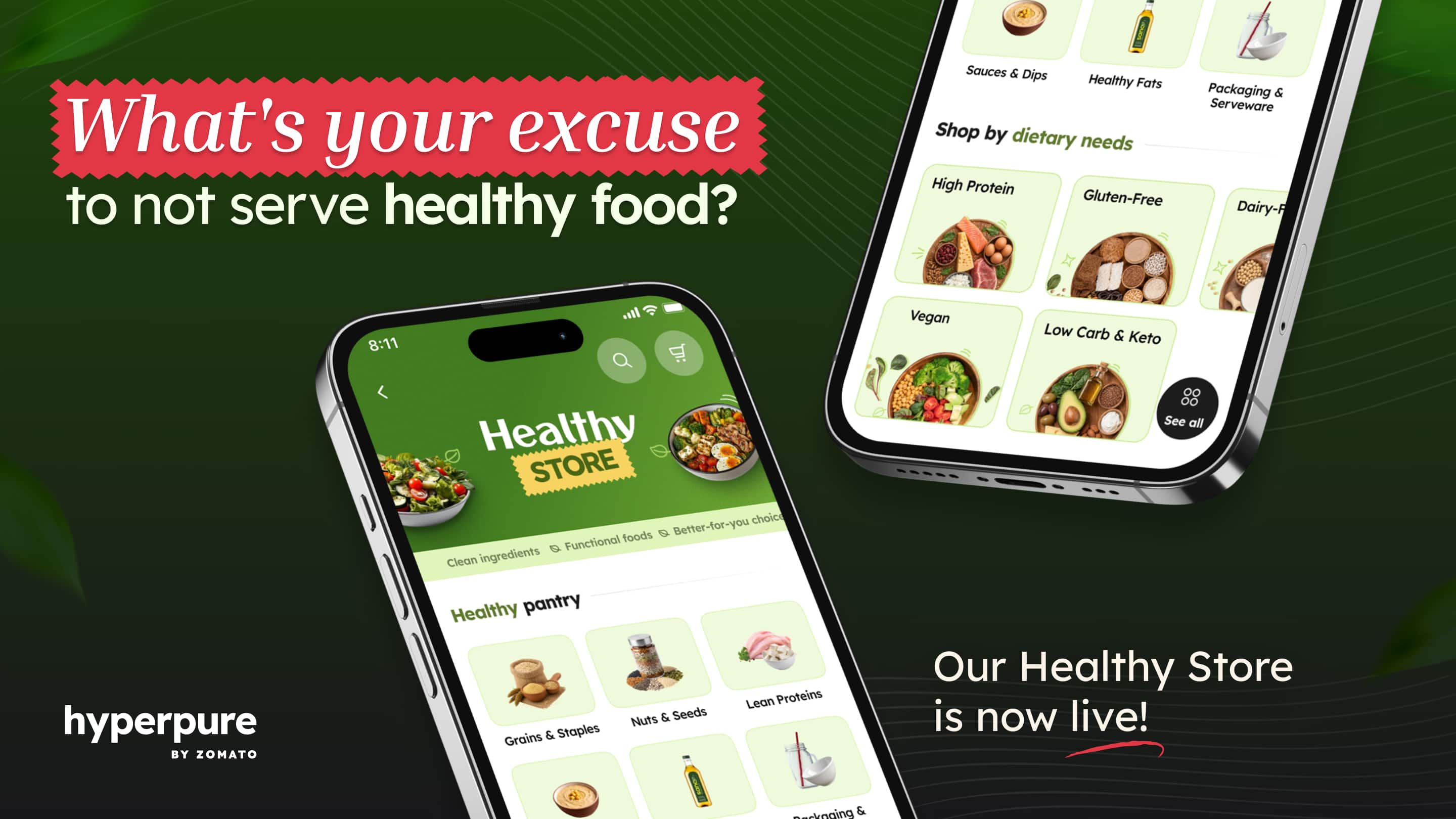
To support this transition, the backend supply chain is already adapting. Hyperpure has responded to exactly that brief. Healthy Store, now live on the Hyperpure app, aggregates clean, high-quality ingredients across every major dietary preference, from gluten-free and keto to high-protein, dairy-free, and vegan. Commercial kitchens can now stock lean proteins, healthy fats, and whole grains at wholesale prices. For restaurants trying to meet this new class of intentional diners where they are, the supply chain finally has an answer.
 Sources: Bain & Company; Cornell University / Journal of Marketing Research; KFF Health Tracking Poll; Gallup National Health and Well-Being Index; Circana; EY-Parthenon; Numerator; ICMR-INDIAB; Grand View Research; Statista; Datassential; Zomato.