
Surviving the burn: How restaurants are adapting to the LPG crisis
The ongoing LPG shortage is putting immense pressure on an industry that already operates on razor-thin margins. While some restaurants in large commercial complexes use PNG and remain relatively unaffected, the vast majority still rely heavily on LPG for daily operations. It’s not an easy time for restaurants.
Across the country, kitchens are adjusting in real time. Kitchens are being reworked, processes are evolving, and operators are doing whatever it takes to stay functional amid uncertain supply. With this piece, our aim is to keep the conversation open and ensure kitchens can learn from each other as they navigate this particularly challenging phase.
It is a difficult moment. But it is also revealing how adaptable commercial kitchens can be when pushed to their limits. Here’s how kitchens are responding.
The induction pivot and equipment shifts
Across formats, induction cooking has emerged as the most immediate fallback. Most restaurants are adopting it to reduce dependence on LPG and keep kitchens running.
We’ve seen nearly a 300x increase in demand for induction stoves on Hyperpure over the past week.
For chefs, the value of induction goes beyond substitution. As Chef Avimukt Taparia, Culinary Development Lead at Hyperpure, explains:
“Induction cooking offers precise heat control for delicate tasks like preparing sauces, chocolate tempering, and dum cooking, delivering consistency with minimal heat loss and a cleaner mise en place. While LPG’s open flame remains unmatched for charring, tandoor-style finishes, and wok hei, induction provides precision, repeatability, and operational stability, making it a reliable backup in professional kitchens.”
This change in equipment is not limited to induction stovetops.
Some pizzerias are shifting from LPG-based pizza ovens to electric ones. Similarly, with rising coal costs, tandoor-led kitchens are beginning to experiment with electric tandoors as an alternative to traditional coal-fired setups. While these alternatives help maintain continuity, they often require adjustments in technique and, in some cases, a slight compromise on flavour and texture.
Kitchens are also tightening menus to prioritise dishes that can be executed faster and with less fuel. For most, it is more viable to operate with a leaner menu than to shut down altogether.
Even so, electric equipment and induction together remain the most practical bridge for most kitchens. Imperfect, but necessary.
Rethinking the kitchen: From cooking to assembly
Alongside these changes, a deeper operational shift is underway.
Kitchens are gradually moving from cooking-heavy setups to assembly-led models.
Ready-to-cook inputs such as pre-cut vegetables, base gravies, and marinated proteins are being used to reduce on-site cooking time.
At the same time, central kitchens and commissary setups, both in-house and external, such as Hyperpure’s Food Park, are playing a larger role. A significant portion of cooking and processing in these facilities is carried out using electric equipment, reducing dependence on LPG at the outlet level.
Large-batch cooking is being moved upstream to these facilities, where ready-to-cook components are prepared, enabling outlets to operate with a more assembly-led service model. A range of ready-to-cook and ready-to-heat components is now available on Hyperpure to support this shift.
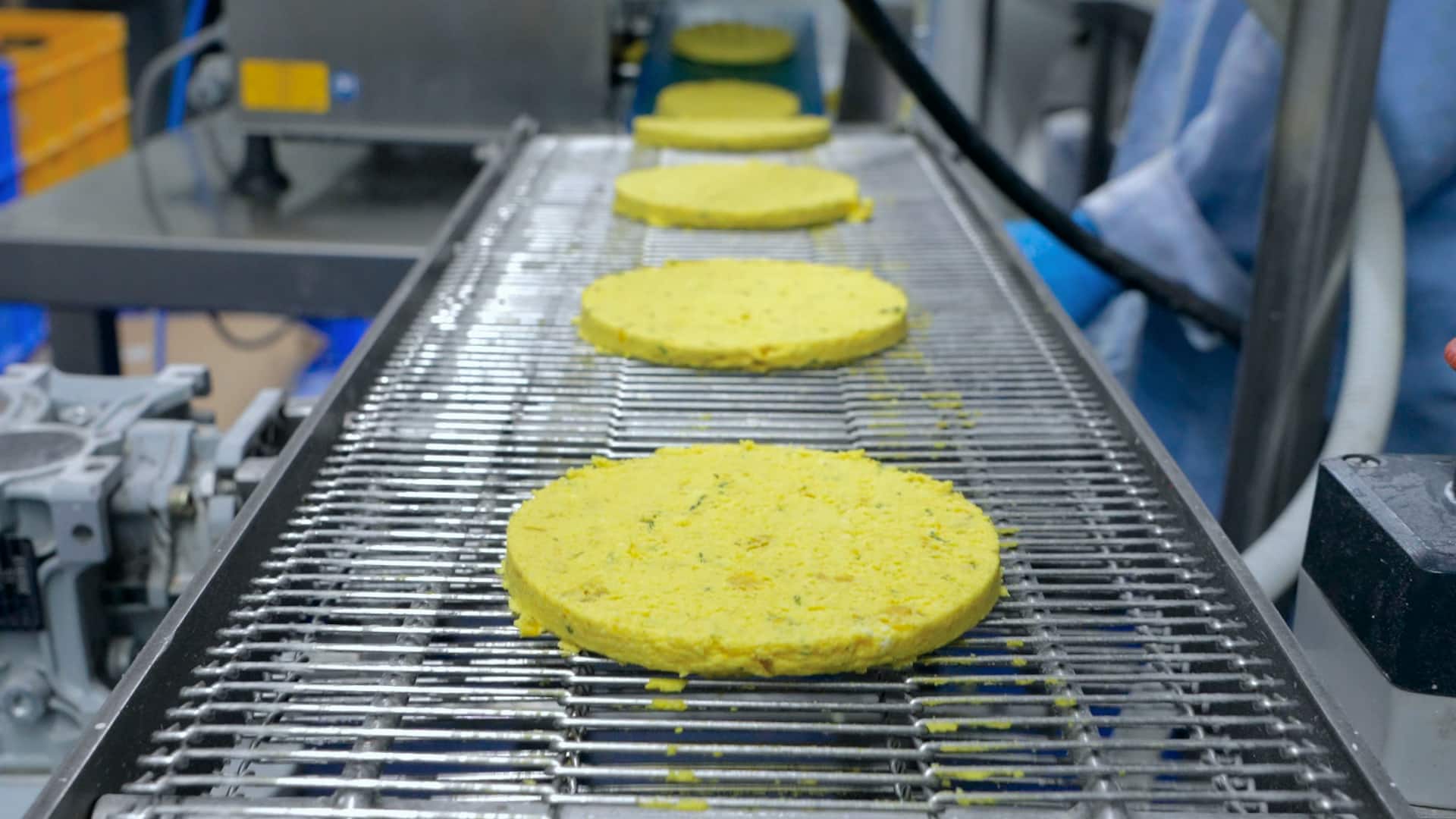 (Burger patties being prepared at Hyperpure’s Food Park)
This does not eliminate the need for gas entirely, but it meaningfully reduces dependence where it matters most, during peak service.
Looking back to move forward
Not all solutions are modern.
Some restaurants, particularly those rooted in traditional cuisines, are returning to firewood. For them, this is not just an alternative but a return to original technique.
This is especially visible among biryani and regional North Indian kitchens, where wood-fired cooking has always been integral.
“For certain dishes, firewood isn’t a workaround. It’s closer to how they were originally cooked,” said the owner of a Delhi-based North Indian restaurant.
Azmat Ali Mir, owner of the Bengaluru-based Kashmiri restaurant Sarposh, explains:
“We’re returning to cooking over firewood, the traditional way Kashmiri food has always been prepared. Our team consists of professional wazas who have grown up cooking on firewood; in fact, adapting to gas was the real learning curve for them. In many ways, firewood is more efficient on time, and it unquestionably delivers better flavour.”
While not viable for all formats, this highlights an important idea. Resilience sometimes lies in revisiting older methods, not just adopting new ones.
Small pivots to save gas
Alongside larger operational changes, kitchens are also refining everyday practices to stretch fuel further. These may seem like small changes, but at scale, they add up. We spoke to Chef Sadaf Hussain, author and consulting chef, who shared practical, on-ground techniques being adopted across kitchens:
- Flat-bottom cookware: Heats faster and distributes heat more evenly
- Batch-prep base gravies: Reduces repeated cooking during service
- One-pot dishes like pulao or tehri: Combine multiple components, saving both time and fuel
- Parboiling vegetables: Allows quicker finishing in gravies
- Stack cooking: Uses pressure cookers to prepare multiple components simultaneously
While these are not new techniques, chefs are returning to them with renewed focus.
Moving forward
We understand that some formats are able to adapt more easily, while for others, the transition is far from straightforward.
There is no universal solution here. Constraints vary by cuisine, format, and infrastructure.
This is a tough phase for the industry. But the response so far has been grounded and pragmatic. Kitchens are simplifying operations, adapting where they can, and finding ways to keep going. Moments like these often become drivers of innovation.
For now, our goal at Hyperpure is to keep this exchange of ideas going, while supporting restaurants with the equipment and solutions they need to stay operational through this phase.